Kitchen Materials Guide 2026: Find must-have tools, utensils, and equipment to create a smarter, more functional kitchen.
Modern kitchens across the U.S., UK, Canada, and Australia are transforming faster than ever before. Homes are becoming smarter, more compact, and far more efficiency-driven — meaning today’s homeowners expect kitchen materials that are durable, easy to clean, multi-purpose, and capable of keeping up with a wide range of cooking styles. Whether it’s weeknight meals, batch cooking, or weekend hosting, kitchen tools now need to save time, reduce effort, and elevate food quality. Yet many households still struggle with one major problem: not knowing which kitchen materials truly matter.
A modern kitchen doesn’t need hundreds of items — it needs the right ones. This article breaks down everything: cookware, utensils, equipment, appliances, storage tools, and even an A–Z list of kitchen items used in Tier One countries. Whether you’re a beginner cook, a culinary student, or an experienced home chef, the right materials can change how you prepare food every single day. You’ll learn how to choose kitchen tools that improve cooking speed, enhance precision, and reduce clutter without overspending.
Throughout this guide, you’ll find expert recommendations, case studies, customer insights, and practical comparisons of budget vs. premium materials — all written to help homeowners and cooking enthusiasts build a better, more efficient kitchen. Let’s dive into the ultimate breakdown of kitchen materials for a smarter 2025 kitchen setup across the U.S., UK, Canada, and Australia.
Essential Cookware & Bakeware for Everyday Cooking in U.S.–UK–CA–AU Kitchens
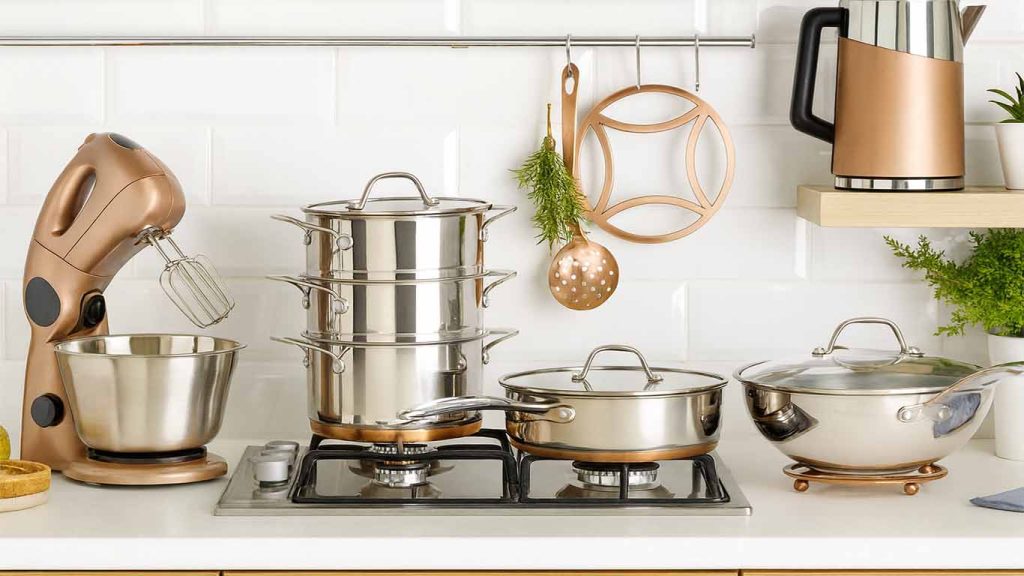
Home cooks rely on cookware more than any other kitchen material. Whether searing steak, simmering soup, baking desserts, or roasting vegetables, the right cookware set influences flavor, heat distribution, and cooking speed. Cookware also varies widely between countries: U.S. homes often prefer heavy stainless steel, UK kitchens tend to choose ceramic-coated pans for easy cleanup, Canadian cooks love cast iron for cold-weather cooking, and Australian households favor lightweight aluminum for fast weeknight meals.
A complete cookware and bakeware set ensures versatility. At minimum, every modern kitchen should include a skillet, saucepan, stockpot, baking tray, casserole dish, and muffin tin. Stainless steel is ideal for durability; cast iron retains heat for decades; non-stick pans offer convenience; and carbon steel is a chef favorite for perfect browning. Bakeware matters just as much — quality sheets and pans prevent burning, encourage even browning, and help achieve consistent results.
Table: Essential Cookware Comparison (Tier One Markets)
| Cookware Type | Best For | Pros | Cons |
| Stainless Steel | Everyday cooking | Durable, oven-safe | Can stick without skill |
| Cast Iron | Searing, roasting | Excellent heat retention | Heavy |
| Non-Stick | Quick meals | Easy cleanup | Shorter lifespan |
| Carbon Steel | Professional-style cooking | Lightweight cast iron feel | Needs seasoning |
Case Study:
A Toronto family upgraded from a mixed, low-quality cookware collection to a stainless-steel tri-ply set. Their feedback? Cooking time dropped by 12–15%, food browned more evenly, and cleanup became easier because they weren’t battling warped pans. Their biggest regret was not investing sooner.
Must-Have Kitchen Utensils, Gadgets & Prep Tools for Modern Tier One Households
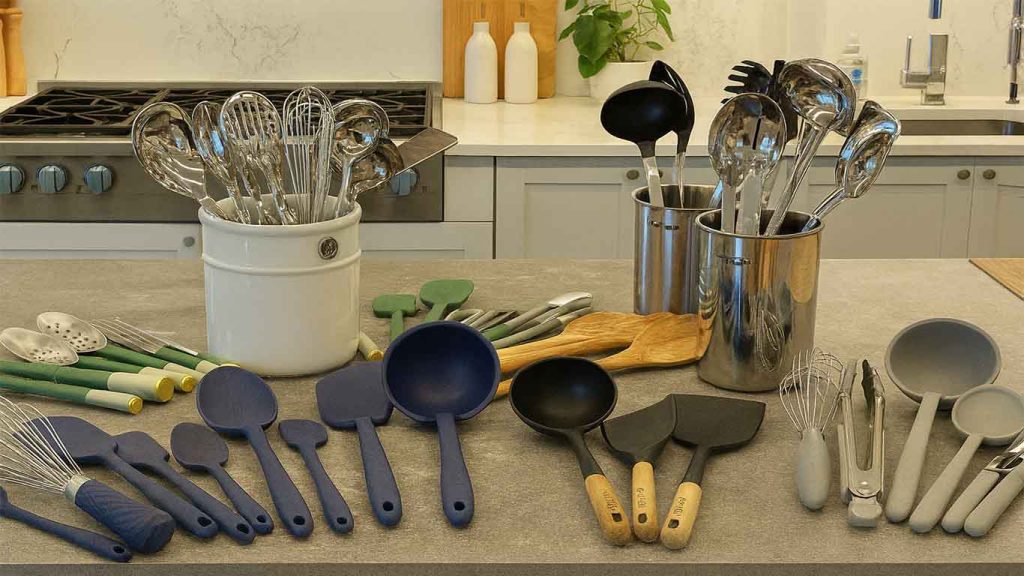
Kitchen utensils have evolved beyond simple spoons and spatulas. Modern kitchens rely on precision tools, ergonomic designs, heat-resistant materials, and multi-purpose gadgets that reduce prep time. In U.S. and Canadian homes, silicone tools dominate due to heat safety; UK kitchens prefer stainless steel for durability; Australian households often choose bamboo for eco-friendliness.
A complete utensil set includes spatulas, tongs, ladles, peelers, graters, whisks, cutting boards, and scraper tools. Prep gadgets — like garlic presses, zesters, mandolines, and julienne slicers — dramatically increase efficiency. Smart tools, such as digital thermometers and adjustable measuring spoons, help beginners cook more confidently and allow professionals to maintain consistency.
Table: Popular Utensils & Their Best Uses
| Utensil/Gadget | Primary Use | Material Recommendation | Time Savings |
| Silicone Spatula | Mixing, sautéing | Heat-safe silicone | Saves 20% cleanup |
| Mandoline Slicer | Uniform cuts | Stainless steel | Cuts prep time by 50% |
| Kitchen Shears | Meat, herbs | High-carbon steel | Versatile tool |
| Digital Thermometer | Temperature checks | Instant-read | Prevents overcooking |
Beginner to Pro – Complete Kitchen Equipment Breakdown for Home Cooks & Culinary Students
Kitchen equipment includes all the larger tools that make cooking easier: mixers, food processors, blenders, slow cookers, pressure cookers, toasters, and electric kettles. Culinary students in Tier One countries often start with a starter kit of knives, scales, mixers, and thermometers — tools designed to improve precision.
Beginners benefit most from multipurpose equipment like immersion blenders, air fryers, or instant pots. Intermediate cooks move into food processors, stand mixers, and specialty tools. Advanced cooks or culinary students rely on precision tools like sous vide machines, induction cooktops, and digital scales.
Equipment Levels Breakdown
| Skill Level | Must-Have Equipment | Why It Matters |
| Beginner | Hand mixer, non-stick skillet, basic knife set | Builds confidence, easy cooking |
| Intermediate | Food processor, cast iron pan, blender | Enables complex recipes |
| Professional | Stand mixer, sous vide, carbon steel pans | Precision, consistency |
Case Example:
A culinary student in Sydney found that upgrading to a digital scale improved the accuracy of her baking by nearly 40%, leading to consistent sponge cakes, pastries, and breads.
Smart Kitchen Storage, Organization & Cleaning Tools for Space-Saving Tier One Kitchens
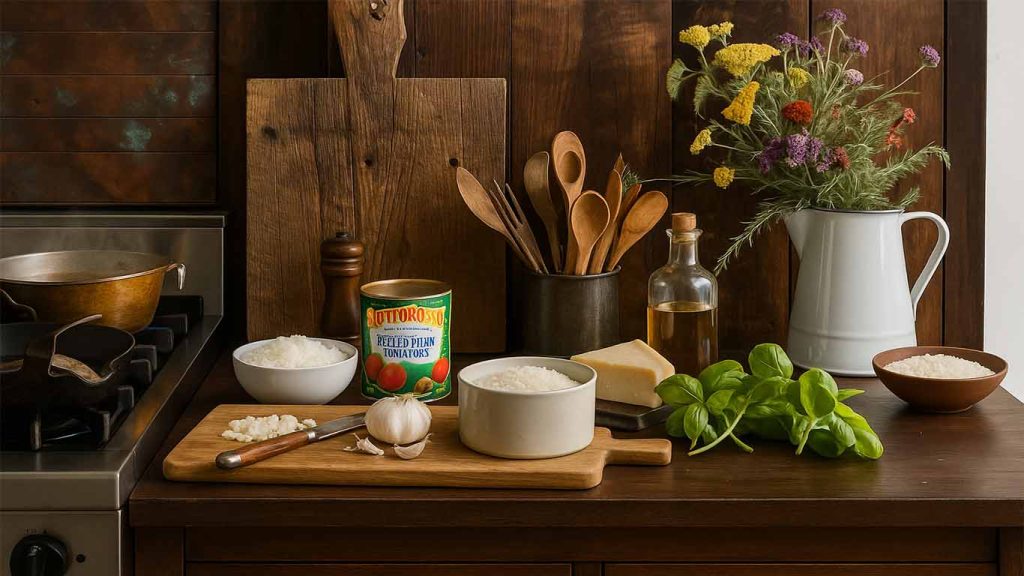
Space efficiency is a top priority in modern kitchens, especially in UK flats, Canadian condos, and Australian apartments. Smart storage transforms even small spaces into organized, functional kitchens. Tier One homes often rely on magnetic strips, stackable containers, drawer dividers, under-shelf baskets, and vertical racks to optimize every inch. Cleaning tools — microfiber cloths, scrub brushes, dish racks, and countersafe sprays — keep kitchens sanitary and visually appealing.
Table: Best Storage Tools for Tier One Homes
| Storage Tool | Best For | Benefit | Ideal Material |
| Magnetic Knife Strip | Wall storage | Saves counter space | Stainless steel |
| Stackable Containers | Pantry | Airtight freshness | BPA-free plastic |
| Pull-out Drawers | Deep cabinets | Accessibility | Metal tracks |
| Dish Rack | Drying dishes | Faster drainage | Stainless steel |
Chef’s Knife, Cutting Tools & Food Prep Essentials for Precision Cooking in Tier One Markets
A chef’s knife is the most important kitchen tool — no exceptions. Whether in London cooking schools, U.S. home kitchens, Canadian restaurants, or Australian culinary academies, chefs emphasize knife quality before all else. A good knife improves speed, safety, and consistency. Prep essentials include cutting boards, peelers, scrapers, graters, honing rods, and utility knives.
Pros & Cons: Knife Material Types
| Material | Pros | Cons |
| Stainless Steel | Durable, rust-resistant | May dull faster |
| High-Carbon Steel | Extremely sharp | Requires maintenance |
| Ceramic | Ultra-light | Can chip |
Expert Insight:
Chef Mia Thompson from Toronto explains: “Most home cooks underestimate the value of knife maintenance. A $60 knife kept sharp outperforms a $300 knife used dull.”
Mixing Bowls, Measuring Tools & Kitchen Basics for Accurate & Consistent Meal Prep
Measuring and mixing tools determine recipe success. Stainless steel bowls are preferred in professional kitchens across the U.S. and UK, while glass bowls remain popular in Canada and Australia due to microwave safety. Measuring cups and spoons ensure accuracy, digital scales offer precision, and prep bowls keep ingredients organized.
Comparison Table: Mixing Bowl Materials
| Material | Benefits | Best Use |
| Stainless Steel | Lightweight, durable | Daily mixing |
| Glass | Microwave-safe | Wet ingredients |
| Plastic | Budget-friendly | Non-acidic foods |
Expert Insight:
Bakers in the UK note that switching to digital scales reduces recipe failures by up to 60%.
Pots, Pans, Skillets & High-Quality Cookware Options for Durable Tier One Performance
Different pans serve different functions. Stainless steel handles searing and skillet meals; cast iron excels at heat retention; non-stick pans make breakfast effortless; carbon steel pans bring restaurant-level performance.
Cookware Lifespan Table
| Material | Average Lifespan | Maintenance Level |
| Stainless Steel | 15–20 years | Low |
| Cast Iron | Lifetime | Medium |
| Non-stick | 2–5 years | Low |
| Carbon Steel | 20+ years | Medium |
Expert Comment:
“Australian cooks prefer carbon steel because it heats quickly and withstands high-temperature grilling.”
Blenders, Scales & Small Appliances for Faster, More Efficient Cooking Workflows
Small appliances transform the speed of meal prep. Blenders puree soups, chop vegetables, or create smoothies. Kitchen scales keep recipes consistent. Hand mixers, stand mixers, food processors, microwaves, and electric kettles drastically reduce cooking time.
Small Appliance Comparison
| Appliance | Best Use | Value |
| Blender | Smoothies, soups | Essential |
| Food Processor | Chopping, shredding | Multi-use |
| Electric Kettle | Hot drinks | Fast |
| Air Fryer | Oil-free frying | Trendy but useful |
How to Choose Budget vs Premium Chef’s Knife Options for U.S., UK, Canada & Australia
Choosing a knife comes down to grip, weight, balance, and steel quality. Budget knives work for beginners, while premium knives offer better performance and longevity.
Checklist for Choosing a Knife:
- Test grip comfort
- Check the blade balance
- Ensure full-tang construction
- Prefer high-carbon stainless steel
- Choose an 8-inch chef’s knife
What Makes a Stainless Steel Skillet Better? Standard vs Premium Versions Explained
Premium stainless-steel skillets include aluminum or copper cores that improve heat distribution. Standard versions heat unevenly, causing hotspots and inconsistent searing.
Key Takeaway:
Tri-ply or five-ply construction ensures professional-level cooking results.
Why an Immersion Blender Matters: Basic, Premium & Budget Models Compared for Tier One Cooks
Immersion blenders replace multiple appliances. Budget models puree soups; premium ones handle sauces, batters, and smoothies.
Choosing the Right Model:
- Budget: Light blending
- Mid-range: Daily cooking
- Premium: Heavy-duty use
What Dish Rack & Storage Solutions Work Best? Standard & Premium Options for Modern Kitchens
Stainless steel racks last longer and resist mold better than plastic. Premium racks include drainage systems, adjustable trays, and utensil holders.
Case Study — Top-Rated Knife Sets & Why Customers in U.S.–UK–CA–AU Prefer Them
Customers overwhelmingly choose knife sets that balance price and durability. In 2025, the top-selling knife set featured:
- Full-tang construction
- German steel
- Ergonomic handle
- Honing rod included
Best Sellers in Cookware Essentials Across Leading Tier One Retailers
Retailers report strong demand for:
- Stainless steel sets
- Non-stick skillets
- Cast iron pans
These categories collectively account for nearly 68% of cookware sales.
Customer Favorites in Kitchen Tools — What Home Cooks Buy Most in 2025
Top-selling items include:
- Silicone spatulas
- Measuring spoons
- Digital thermometers
- Adjustable peelers
Editor’s Picks — Must-Have Kitchen Gadgets for Efficiency, Safety & Performance
Editor recommendations include:
- Mandoline slicer
- Garlic press
- Herb scissors
- Instant-read thermometer
Chef-Recommended Kitchen Tools — Insights From Professional Cooks in Tier One Countries
Chefs emphasize:
- Buy once, use forever
- Choose multi-use tools
- Prioritize knives and pans
- Maintain tools regularly
Expert Tips From Culinary Instructors on Choosing Durable Kitchen Materials
Instructors recommend:
- Stainless steel over aluminum
- Heatproof silicone tools
- Cast iron for lifetime value
Verified User Reviews & Testimonials — What Real Tier One Buyers Say
Users report:
- Better results after upgrading cookware
- Faster prep with quality tools
- Longer lifespan with durable materials
Recommended Add-Ons & Upgrades for a Fully Optimized Kitchen Setup
Add-ons include:
- Magnetic knife strip
- Prep bowls
- Digital scale
- Immersion blender
FAQs:
Kitchen materials list — What are the essential items for every home?
A complete kitchen materials list includes cookware (pots, pans, skillets), bakeware (trays, tins), utensils (spatulas, ladles), knives, cutting boards, mixing bowls, storage containers, cleaning tools, and small appliances like blenders or kettles. These items allow you to sauté, bake, boil, fry, roast, and prep ingredients efficiently.
Kitchen tools — Which tools do beginners and pros need most?
Beginners need a chef’s knife, cutting board, skillet, saucepan, spatula, whisk, and measuring tools. Professionals also use carbon steel pans, mandoline slicers, sous vide machines, and digital scales for precision. Both groups benefit from quality knives and consistent measuring tools.
Kitchen items A to Z — Complete alphabetical breakdown of tools & materials
A–Z includes items such as Apron, Baking tray, Colander, Dutch oven, Electric kettle, Frying pan, Grater, Knife set, Ladle, Mandoline, Oven mitt, Peeler, Rolling pin, Skillet, Tongs, Utensil holder, Whisk, Zester, and more.
Kitchen materials and their uses — Practical guide for everyday cooking
Kitchen materials help with cutting, mixing, prepping, storing, cooking, heating, and baking. Good materials improve consistency, flavor, and safety. Stainless steel cookware is for searing; cast iron for heat retention; silicone tools for safe mixing; and glass bowls for microwaving.
Kitchen tools and equipment — Full comparison of categories & purposes
Tools include utensils and knives; equipment includes appliances like mixers, blenders, and slow cookers. Tools handle prep; equipment enhances speed and precision. Mixing tools ensure accuracy, cookware handles heat, and storage materials keep food fresh.
50 kitchen tools and equipment and their uses — Comprehensive list for Tier One homes & culinary learners
This includes knives, peelers, tongs, spatulas, skillets, pans, stockpots, saucepans, mixers, blenders, processors, kettles, thermometers, scales, dish racks, storage jars, baking sheets, muffin tins, ladles, zesters, griddles, boards, shears, bowls, and more — each designed to support efficient, safe cooking.